Thérèse Mama Mapenzi: Leading peacebuilding and human rights advocate (Part 3)
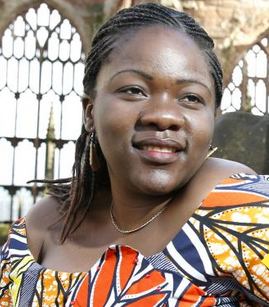
by Ellen Willis
17 February 2025
This week, I finish my three-part interview series with Thérèse Mama Mapenzi.
The interview wraps up by exploring Thérèse’s final thoughts on the issues faced by the DRC, the importance of looking after one’s own health as an advocate and how she envisions life in the DRC for future generations of women.
I begin by asking Thérèse what she would like people living outside the DRC to understand about the realities of families who live there. I want to know if she has insights to share to help people really understand the challenges that people are facing.
Thérèse is clear about the challenges her people face. She says that people in the Congo, especially in current times, are suffering a lot. In part, she puts this down to poor governance, a badly run government and expresses a concern that ‘we seem to be led by political people who do not really understand the problems on-the-ground’. She notes a plethora of problems:
“There’s so many problems: finance problems, governance system problems, security problems, economical problems, social problems.
People don’t have the means to protect themselves. And they are very afraid of what may happen.
Like, in my case for example, I lost my husband in June. I have to go to the justice [department] to get the paper from the judges that allows me to start taking money from my husband’s account. But this system is weak, there is no justice [department] in my town and no way to get the judges to solve my problem. The bank is closed but also the legal system is weak.
This is causing many issues and they don’t have any solution. So this creates poverty, insecurity, many cases of violence. And no one is there to protect the people.”
The toll this is taking on Thérèse is clear for me to see. Acknowledging how emotionally and physically demanding her work clearly is, I ask her how she manages to take care of herself amidst all the anxieties and problems she faces. I am interested in how she looks after her own spiritual well-being. I let her words do the talking:
“This is a good question because sometimes we think that we are strong enough to help others but we also need support for ourselves.
I’m lucky because I deal with psycho-social care and psychology. When my husband died, I was not able to bury him. It was painful for me and then I changed it to the positive side. I said, maybe there is something which wants to protect me from being there, so I don’t want to complain because the war is still there. And if I go I will be in danger. I’m happy because my family is there doing everything for me.
These are ways to try and leave you strong enough to continue to work.
On the other side, I try to make a kind of analysis to distinguish what I am able to do and what I’m not able to do.”
Thérèse is also big on not pushing past your ability to cope. She says:
“When you try to know your limits and your strength, you say: ‘OK this I can do, but this one I can not do.’
Most of the time when you talk to people, when you do these exercises for our emotional resilience, when you try to see the positive side of the situation, it helps us to stay strong.
It’s not always easy for me and sometimes we fail ourselves. I can’t imagine how many times I cry when I’m alone. But at least I tried to build my resilience mechanism to stay strong. ”
I applaud Thérèse’s courage, strength and resilience - and also her ability to know when to hold back and take stock of her own needs. This leads to me to wonder about how she perceives peace and what she thinks would be the ideal scenario for bringing peace to the really complex topic of sexual violence and sorcery accusation-related harm. I ask her straight out: ‘What would peace look like for you?’
“For me, to build peace starts first by trying to put people into the system, so that they can be aware of what the facts are that prevent us from getting peace.
We identify all those facts and then we would create a mechanism of justice which promotes the win-win situation where all the people should succeed in accessing justice. They can have access to different services in life and then promote activities that allow people to work. Because sometimes when people are jobless, when people don’t have work, they think about doing wrong things.
In the world, if we can build a place where people identify a kind of code of conduct and we respect it and we put the lines of saying anyone who would break the codes will be punished like this, and we expect this, and then we promote access to jobs, access to money to all the people.. I think this can help us.
In my area, many women are suffering. But when we started to build these autonomous activities, most of them were able to protect themselves. But they fell down again because of the security situation. ”
I am feeling such awe about Thérèse’s spirit, actions and will at this point of our interview. She is surely an icon for our times so sorely in need of more peacebuilding, more deep reflection and more care for one another. I want to end our discussion on a high note, one that takes us to realising her dreams for a better world. I ask her: If you had one message that you could send to women or younger girls for the next generation, what would you say? Thérèse responds:
“What I can say to the young generation is: Don’t take for granted the situation we have.
If I am talking to you today, I am aware that there are so many women who lost their lives to be here. I know that in the past women didn’t have the right to go to school, they didn’t have the right to participate in decision making, didn’t have the right to vote. So now I’m benefiting from what these women of the past did.
At my level, I’m doing something positive like making advocacy, speaking out to change the system, to promote peace, to promote the participation of women in the government.
The women who will come after us, the new generation, shouldn’t take this for granted but they should work hard to go deeper and to go higher than us.”
Thérèse is worried though, that the new generation doesn't care anymore about what the future will be. It's as if they are crossing their hands and saying ‘oh it's done already’, that they ask the questions ‘why do I need to fight, why do I need to do this?’ Thérèse is adamant that ‘we should continue to fight, to keep the balance’. For, she fears that ‘if we don't do anything, we will fall down again and the situation starts from zero’.
I think about my own generation where I live in the world. Certainly, not as challenging as living in the DRC, but the same thread runs through of taking rights we now have for granted. The thing is, we all do need to stay vigilant and we all need to care for future generations, for all of our futures. And in Thérèse, I feel we have someone who embodies this spirit and is a salient reminder for us all to keep watch, speak out and do what we can to keep building peace. Thank you, Thérèse, you have made my visions for the future stronger and I am so happy to have been able to bring your story, your challenges and your hopes to our little blog. I wish you all the best for your future.