Thérèse Mama Mapenzi: Leading peacebuilding and human rights advocate (Part 1)
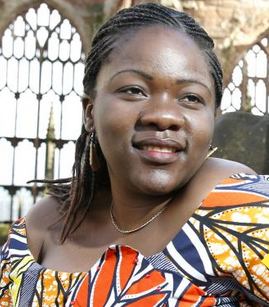
Meet Thérèse Mema Mapenzi, a leading advocate for survivors of sexual violence in the Democratic Republic of Congo.
Image credit: ProPeace
by Ellen Willis
03 February 2025
This week, I dive into a three-part interview series looking at the amazing, groundbreaking advocacy and care work of Thérèse Mama Mapenzi in the Democratic Republic of Congo. I feel very privileged to have had the opportunity to talk with Thérèse and look forward to sharing her work and thoughts with all of you.
Thérèse Mema Mapenzi is a leading peacebuilding and human rights advocate. Renowned for her compassionate, community-rooted advocacy, through her network she creates safe spaces where survivors of sexual violence can speak openly, receive support, and begin reclaiming their dignity.
Over time, her shelter has become a refuge for another deeply vulnerable group: the women and children accused of witchcraft, and as a result of which, have been outcast by their communities. Having previously worked for the Justice and Peace Commission. Thérèse now works as the Director of Centre Olame, working to improve the socio-economic condition of women and girls, and campaigning against gender- based violence.
I began our conversation by asking Thérèse to tell me a little about herself, including where she was born. She explained that she was born in Democratic Republic of Congo and had studied in her home country all the way through primary and secondary schooling and then at university.
Curious as to how she got started in her advocacy role, I asked her about it. She shared that after her studies, she was working as a psycho-social care assistant alongside psychologists. In 2006, she explained that her work was to listen to people who had been traumatised by war and conflict, especially women. She noted that many of the women had been raped, and her role was to listen to their stories.
She was also actively confronted by violence during her work. She takes up one of the experiences she had:
“One day in one of the villages, I was invited to talk to the women. And on my way, I found a woman who was being burnt. Many people were around, so it was very, very violent. And no one could even talk to them, so I stopped my car.
I came to this area to talk about violence against women and I found a woman who was being burnt and beaten by [all] categories of people.
I was powerless to help her.
But at least I talked to the people. And I asked them: ‘Why are you doing this?’.
They said: ‘She’s a witch’.
And this was why they were killing her. That woman - she died. For me, it was a shock.
Later I asked the neighbours: ‘Why did you accuse her of being a witch?’ And they said: ‘See! She lives alone in her house, she does not have her husband! And many people say that she was the witch.’
And that’s why they killed her. ”
Thérèse went on to explain that the follow-up queries revealed that this woman had been accused of being a witch, not because she was one, but because she had nobody to protect her. Her family-in-law wanted to away her lands, so they chased her from her house. Sadly, when she was killed, no-one could resist the family-in-law’s criminal actions.
Thérèse lamented that ‘there are so many cases of sexual violence and witchcraft accusation’.
This disturbing story and Thérèse’s clear distress at the extent of these happenings led me to ask her what she thought were the most difficult challenges that she and her team face when they try to help women survivors.
In Thérèse ‘s opinion, there are several ‘typical challenges’ that she and her team often face. The first is the people who are accusing women of practising witchcraft. She said the accusers are usually really confident that a women is a witch, even to the point where in some cases, she has come across men willing to kill their own mothers based on such an accusation.
Another challenge Thérèse often experiences is the difficulty of providing ‘proof’ when seeking to persuade the accusers that the person is not a witch. She says:
“For us, this is very very painful - knowing that you are not able to protect people’s lives. When a group of people come with stones, machetes and sticks, and they want to kill someone - and you are there - you watch but you are not powerful enough to stop the group of people. ”
The other challenge, says Thérèse, is that ‘sometimes we work in collaboration with the police but when you go to the grounds, the police are there but they don't have the means to protect the people.’ She told me how harrowing the choices are sometimes, from having to make split second decisions to not having the backup many of us take for granted:
“Sometimes we have to put the people into our car to bring them and other times the police have to come into our car to protect the people.
We don’t know how to protect the people in danger.
And the second [problem is], sometimes the police don’t have the necessary means to save the living conditions of the people. It is horrible.”
Thérèse ‘s story prompted me to ask her what steps she though might be taken to help a community recover from the collective trauma of these heinous incidents.
She explained that is was really important to get the community together to discuss what has happened:
“We usually bring the community together and talk about the different problems that we have, especially if we talk about women’s problems.
They [the gatherings] usually involve the police people, the village chief, the local leaders in general and other vulnerable people.
We ask them: What are the main problems we have in this community?
Then we select one of the problems and we ask them: ‘Why do they [community members] think this is a problem?’
And they [the community members] start to provide us with some causes and cases that they identify in the community.
Then we can ask them: ‘How do you think we can resolve this problem?’”
I found Thérèse’s experience humbling and deeply courageous. Her grassroots response to go to the heart of those experiencing the problems is a vital one but we must not lose sight of the courage and effort involved in such an exercise, which Thérèse has undertaken many a time.
There is still much to cover in my interview with the incredible Thérèse, so next week’s second part of this post series takes up how she encourages men to join this important conversation. I also ask Thérèse what legal and cultural changes she believes need to occur to change the current predominant narrative - so do stay tuned for next week’s post.