Thérèse Mama Mapenzi: Leading peacebuilding and human rights advocate (Part 2)
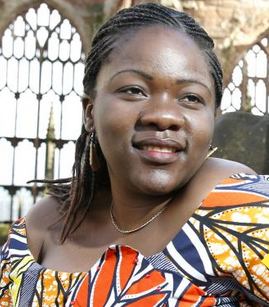
by Ellen Willis
10 February 2025
This week, I continue the second part of my three-part interview series discussing the indefatigable Thérèse Mama Mapenzi, campaigning against sorcery accusation-related violence in the Democratic Republic of Congo. If you haven’t already read Part 1, please check it out first.
I continue the discussion with Thérèse around how witchcraft accusations remain a persistent social threat, particularly for vulnerable women and children. These accusations often arise in moments of crisis - through extreme social, financial or political turmoil and particularly when individuals are looking to scapegoat vulnerable and marginalised women and other vulnerable people in society. In this interview, Thérèse discusses ways in which we can draw men into this conversation, an important aspect since they are often the perpetrators. We also talk about the key areas in need of change to prevent this atrocious human rights abuse and what can be done to support survivors in restoring their well-being and lives. We end by looking at how often witchcraft accusations are used as an excuse or cover for sexual violence.
I tell Thérèse that I imagine it must be very difficult to get collaboration between the perpetrators and the survivors and ask her what she thinks needs to be done to bring men into the conversation on healing and justice.
Thérèse responds by explaining that her advocacy relies upon a concept of ‘positive masculinity’. She says:
“In ‘positive masculinity’, we make a list of all the considerations as women of what we consider a man is.
A good man is like ‘this and this’, and we will list all the criteria.
But also we identify the list of what we consider as a bad man. Among these issues, most of the time the women say it is when a man is unable to feed his family, when a man is weak - which means he is a bad man. Men say things like: ‘I am a man but I’m not as strong as she expects me to be. This does not mean that I’m not a good man, I’m a good person but I’m weak.’”
Thérèse explains that the concept of positive masculinity is about raising awareness. She says that when a man or a boy is strong, he is someone who accepts support from the people around him. Importantly, these people may be men or women. In her conceptualisation, a strong man accepts that he has weaknesses but rather than dwelling on that, he can restore his strength from another woman or man in his community. This is how she and her team discuss the issue with perpetrators and what she calls ‘the big issue’ - sorcery accusation-related violence.
Thérèse notes further:
“...to link it to the magic issue, some men think to become sexually powerful, socially powerful, or financially powerful, [they] can abuse little girls. According to some men, when they abuse a little girl of three or five years of age, they can get special power to become strong or to get money. Or for those who have HIV, they think this little girl can cure them. This is very stupid but it happens within the community.”
This disturbing reality is definitely something in need of challenging. I ask Thérèse what the main things are that she’d like to see that can challenge such attitudes and actions, like a change in law, culture or community life, that would assist survivors. I am curious to know whether she is aware of any additional programs or changes in law or structures that she thinks might help prevent this violence.
Thérèse agrees that there is a need for ‘many things to change’. She notes that there are laws in the Congo but she expresses a concern that their aim often protects the perpetrators, saying that ‘sometimes, regulations are just meant to protect their own interests’. One example Thérèse proffers is that of cases of sexual violence in the DRC. She explains:
“When you go to many publicity documents of the international organisations, they say there is ‘ zero tolerance’ towards those people who abuse women.
But these regulations [in the DRC] are not emphasising on punishing the perpetrators and repairing the damage costs”
In relation to resolving this violence, Thérèse thinks that ‘we will never end the talk about the violence in the world.’ She is concerned that while we can identify the different cultural practices that emphasis violence against women, name them and advocate about them, this will not be sufficient when the regulations fail to be put into practice. As she says, without the enforcement, ‘it is nothing’.
Thérèse points out another glaring reality: ‘… in many governments, we have men who delete us.’ In many cases, she notes, the perpetrators are men who perceive this as behaving in a ‘masculine’ way. She raises a great concern:
“In some cases, we [have] found men who are leaders [in their communities]. And then when they rape women or abuse women, again you find these [very same] men are the ones who should bring solution.
They don’t wear the problems of women the same way we do.
It’s very important that women participate in decision making to bring the problems on the table. And also to explain how the problems of women and men should be treated at different levels of the communities and society.”
I ask Thérèse about her opinion on how many cases of sexual violence use witchcraft and sorcery reasons or excuses to justify what has taken place.
Noting that it’s difficult to explain what is justified as sexual violence and what is justified as witchcraft accusations, she sees both types of violence as being about power asymmetries:
“But if I take the relationship between the witchcraft accusation and sexual violence, I see it’s a problem of power.
You see, if a man wants to show that he is powerful enough, that he wants to gain something, then he abuses women.
In most of these cases that we try to accompany into the trauma centres, if the woman says ‘I refuse’ and ‘I’m not a witch’, then the man who is the judge will kill me.
Sometimes, if I want him to testify that I was not a witch, he will try and force me to have sexual relations with him so that he can protect me.
On the other side, like the political men who try to get external power - I don’t know how to explain it in English - but sometimes men believe that they need external power, divine power, to be protected. Some of them believe that if they go with a woman who is a virgin or a small girl or small child, they can get power.
In this consideration, they think that the bodies of the women can carry some divine power to give to them, to heal them or to make them strong enough, to get money and so on. In this way, they justify the sexual violence and the accusation.”
It’s clear to me that Thérèse has done a lot of deep reflection on the issues surrounding the violence women face. In the final part of this three part interview series, I ask Thérèse what she’d like for everyone to understand about the harsh relatives of what is happening in the Democratic Republic of Congo. I also ask her how she takes care of her own well-being, along with what she thinks peace truly looks like. You’ll also find a parting gem of wisdom from Thérèse , so please be sure to tune in next week for the final instalment in this interview series.