10th August - World Day Against Witch Hunts: Why It’s More Than Just History
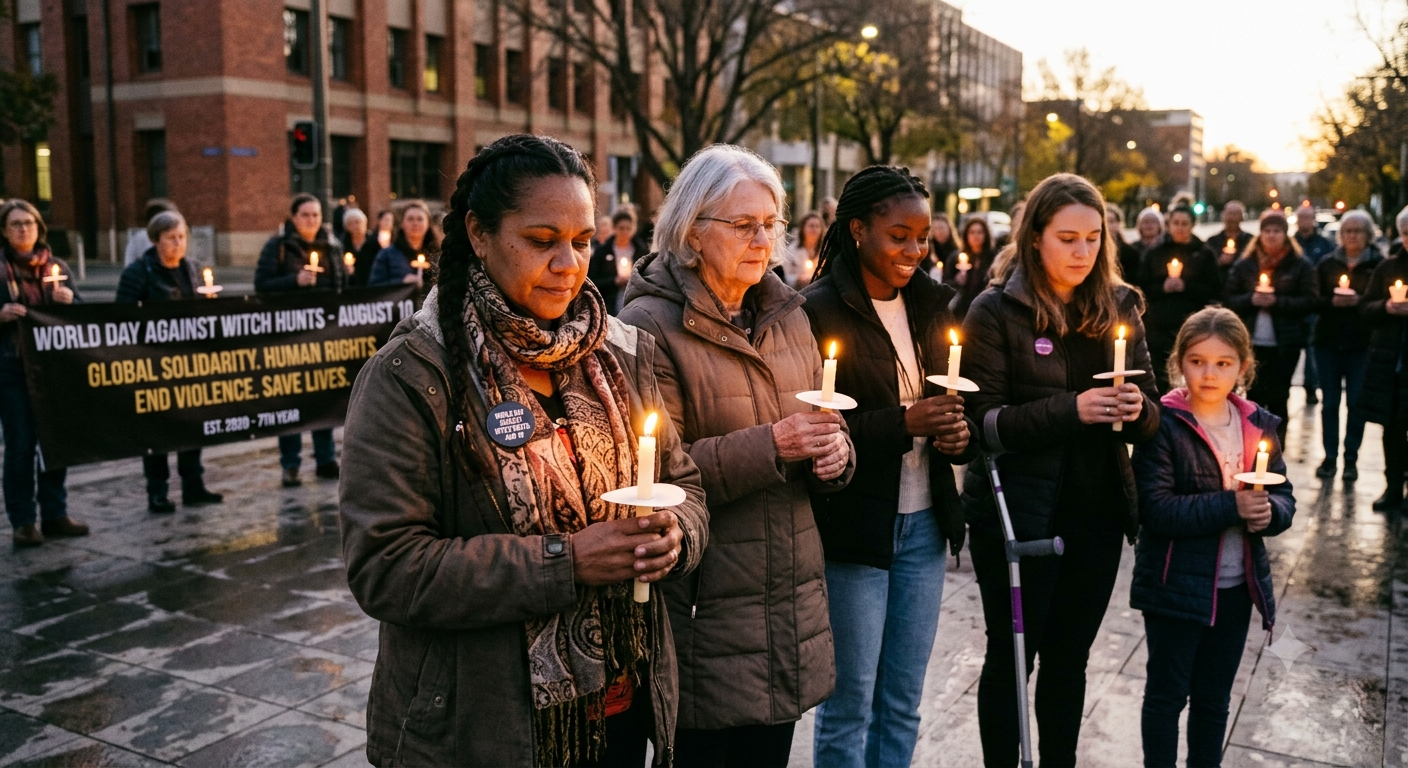
From Salem tales to spell books, modern pop culture makes witch hunts feel like ancient history. But the dark reality looks very different. Today, real people are still paying with their lives for unexplained misfortunes. Discover the origins of World Day Against Witch Hunts on 10th August, and learn 3 simple ways you can help turn the tide.
by INAWARA
When you hear the phrase ‘witch hunt’, does your mind drift to Salem folklore, dusty old leather tomes of spells or a flashy Halloween costume? These modern-day interpretations can leave the impression that harming people under the guise of accusing them of being a witch is a thing of the past.
Sadly, if we pull back the curtain, the reality looks quite different.
Today, people are still being threatened, ostracised, injured and even killed because they are accused of practising witchcraft. In particular, this violence heavily impacts women, children and persons with disabilities.
The 10th of August marks the World Day Against Witch Hunts. Now in its seventh year since being officially established in 2020, this day is about global solidarity, human rights, raising awareness and saving lives.
What exactly is the World Day Against Witch Hunts?
This awareness-raising day was initially created by the international mission society missio (Internationales Katholisches Missionswerk missio) but its roots trace back to 10th August 2012.[1] On that day, a woman in Papua New Guinea was falsely accused of witchcraft and endured a horrific, multi-day ordeal. She survived and escaped, largely thanks to the bravery of a Swiss nun named Sister Lorena Jenal, who brought her to safety.[2] [We could mention we will put their report up soon?]
To turn a moment of trauma into a movement of healing, the 10th of August was chosen as a global day of remembrance. Dedicating these 24 hours was a way to pool international initiatives and bring a dark issue into the light.[3] It shines a spotlight on a reality many people don't know still exists: that in dozens of countries worldwide,[4] vulnerable individuals are still blamed and targeted for unexplained illnesses, tragic deaths, crop failures or community misfortunes.
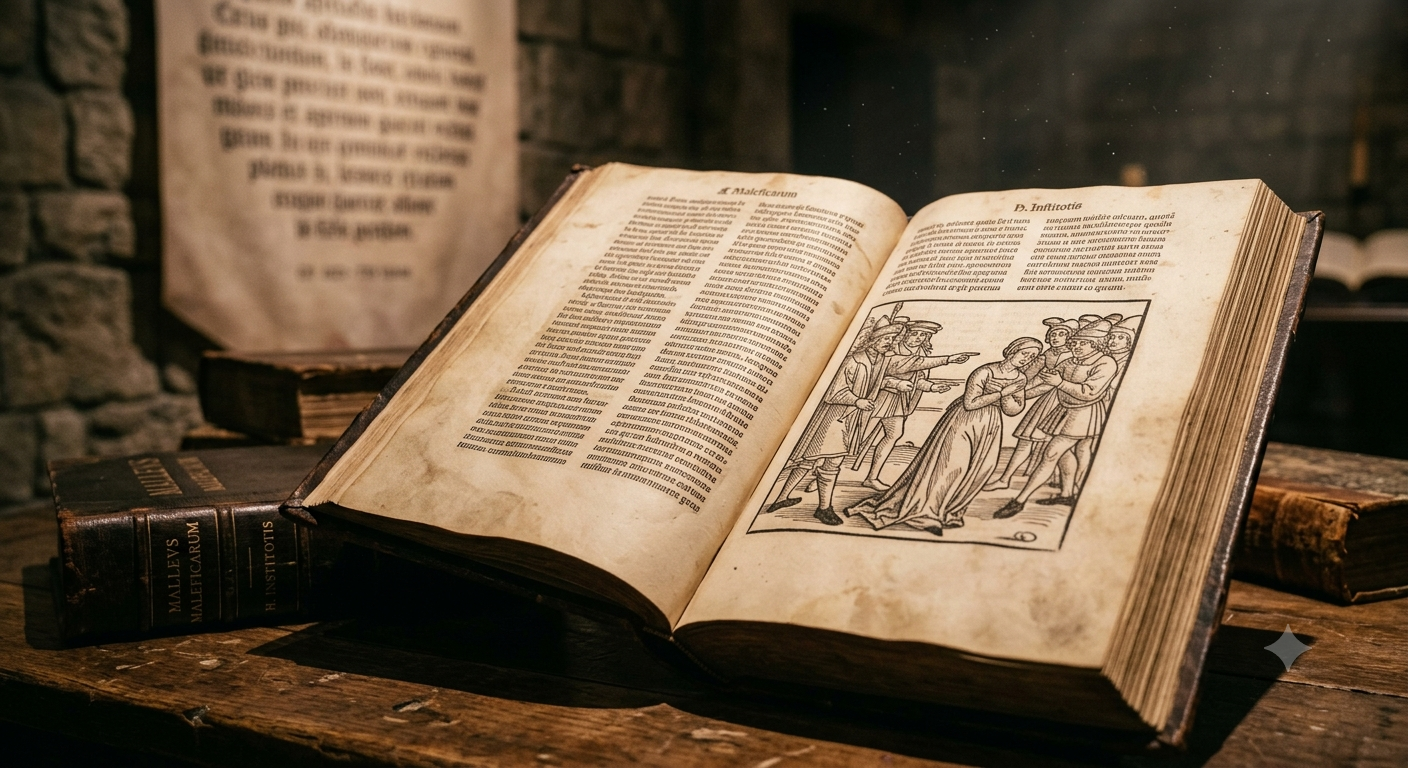
If you look at how this history repeats itself, it’s astonishingly consistent. In an article by DailyArt Magazine, researchers point out that modern accusers still use the exact same psychological playbooks found in the infamous 1486 text Malleus Maleficarum (The Hammer of Witches) - scapegoating vulnerable and marginalised individuals during times of collective fear and anxiety.
Why this matters (especially in 2026)
It’s easy to feel like we live in an ultra-modern, hyper-connected world where superstition has no grip. But modern witch-hunting is less about magic and more about social vulnerability, gaps in education and a lack of accessible healthcare and related government services. When a community doesn't have access to modern medicine, scientific education or trusted legal protections, fear often takes over, and people look for someone to blame.
Why does honouring this day’s seventh anniversary matter right now? Because awareness works. Over the last six years, global networks have pooled resources, funded safe houses, raised awareness locally and internationally and pushed for stronger local laws. This is highlighted by advocacy groups like The Voice Inc. PNG, Advocacy for Alleged Witches, End Witch Hunts and INAWARA.
By talking about it openly, we strip away the silence that allows these injustices to happen in the dark. It’s about replacing a culture of blame with a culture of protection, putting a stop to a devastating but lesser-known form of human rights abuse.
3 ways to bring the spirit of the day to life
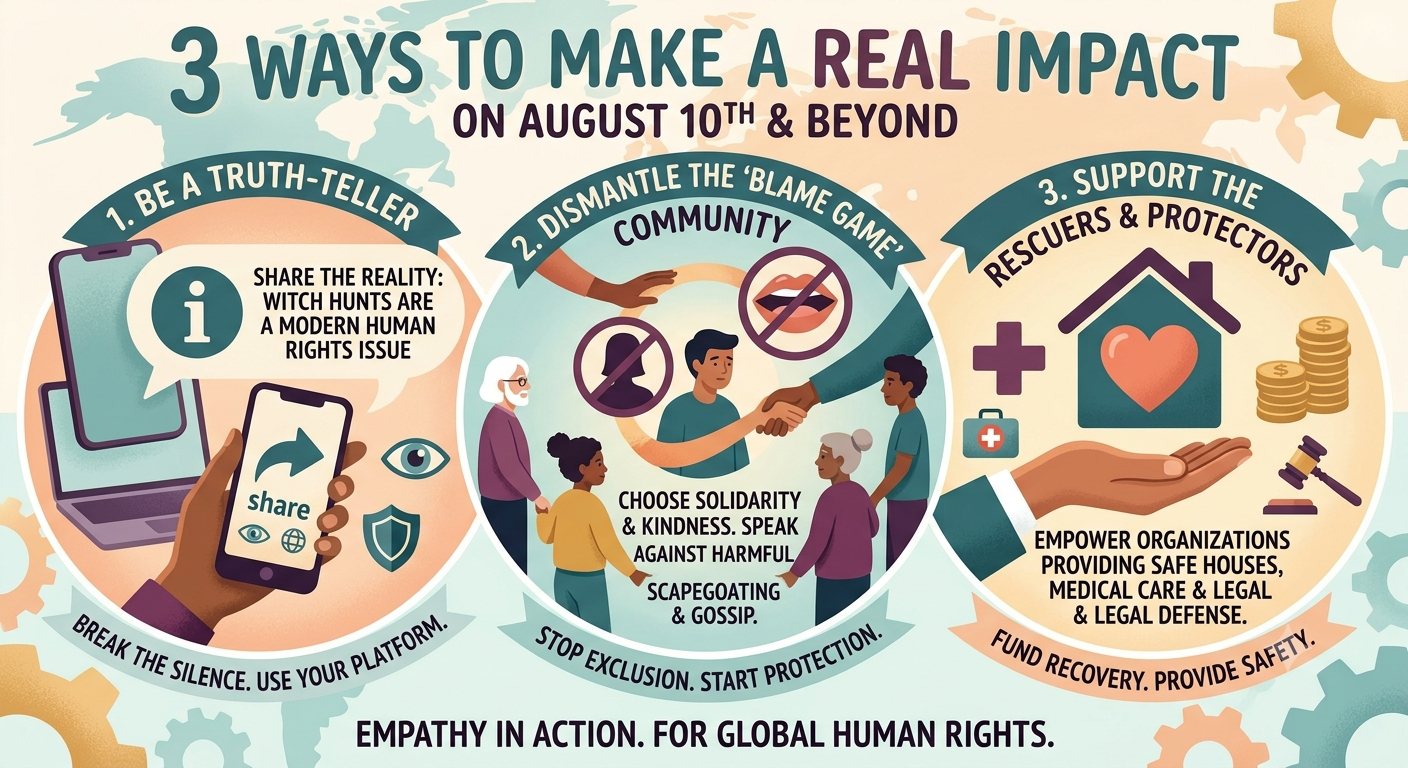
Feel free to download and share this image & post on your socials!
You don't need to be a human rights expert to make an impact. Participating in the spirit of the 10th of August is all about fostering empathy and raising awareness exactly where you are:
Be a truth-teller: The easiest step? Share the knowledge. A simple post on your socials reminding your friends that witch hunts are a modern human rights issue, not just ancient history, can open eyes. Use your platform to amplify the work of human rights watchdogs in this area.
Dismantle the ‘blame game’ in daily life: At its core, a witch hunt happens when a group turns against an individual during a crisis. We can practise the opposite spirit by refusing to be passive bystanders. Speak out against harmful gossip, online scapegoating or knee-jerk blame when things go wrong in our own social circles. Choosing solidarity over exclusion starts at home.
Support the rescuers and protectors: If you are able, consider donating to or offering in-kind help to organisations that build safe houses, provide medical care and fund legal defence teams for accused individuals in high-risk places.
Seven years into this global movement, the goal remains absolutely clear: making sure everyone, everywhere, feels safe in their own community. This 10th of August, let's trade fear for empathy, connection and understanding.
References
[1]https://muvs.org/en/museum/newsletter/2022-08-09-10th-august-world-day-against-witch-hunts/
[2]https://muvs.org/en/museum/newsletter/2022-08-09-10th-august-world-day-against-witch-hunts/
[3]https://muvs.org/en/museum/newsletter/2022-08-09-10th-august-world-day-against-witch-hunts/
[4]https://static1.squarespace.com/static/636a707e71e94d4e82623edb/t/685df1206a7b26672d955d56/1750987084522/Global+review+-+Effective+Legislative+Approaches+Report.pdf
Images generated using Gemini AI