Ruth Kissam: Meet the woman changing cultural attitudes in Papua New Guinea
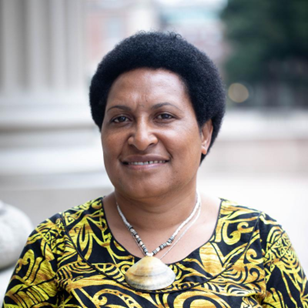
Meet Ruth Kissam, a courageous activist from rural Papua New Guinea whose life was forever changed by her fight against sorcery-related violence. Born into a devout family and faced with cultural pressures, Ruth chose a path of compassion and justice, working tirelessly to challenge harmful beliefs and protect women accused of witchcraft. Her story is a powerful testament to resilience, faith, and the transformative power of advocacy in shaping safer, more equitable communities.
Image credit: Columbia World Projects
by Ellen Willis
03 December 2025
Ruth Kissam was born the daughter of a pastor into a small rural village in the Enga province of PNG. Her father had a career as an interpreter for missionaries and was heavily involved with the church. After graduating high school, Ruth went on to study law at the University of Papua
New Guinea. However, during her second year of law, her mother became ill. This prompted Ruth to leave university to care for her, as well as her three younger brothers and father. During this time, she recalled feeling a lot of pressure to get married and secure a ‘bride price’ for her tribe, as was the expected cultural practice. Despite this pressure, however, Ruth chose a different direction and became a dedicated activist working to address violence related to witchcraft and sorcery. (1)
Initially, after attending university, Ruth became a community organiser. In 2006, she was involved in projects for raising awareness about HIV and AIDS. During this period, Ruth also drafted a piece of legislation called Gutpela Sindaun or the Community Law. This legislation aimed to promote peace and self- policing communities, and support for grassroots programs to create safer villages.
It was in 2013 when Ruth was first exposed to sorcery accusation-related violence. While waiting for her father to finish a hospital appointment, she came across a pamphlet from the local morgue that listed recent death notices. Among these notices, Ruth noticed a woman’s name with the word ‘sorcerer’ written next to it. She was shocked to realise it was Kepari Lenitat, a local woman she knew, who had been killed close to the church her father had built. According to reports, the 20- year- old had been bound, stripped, tortured and killed in response to a sorcery accusation. (2,3,4)
Ruth learned that Kepari had been persecuted by her community for three years, and that she had been accused of a variety of crimes, such as theft of money, and of being the cause of vermin infestations, local outbreaks of scabies in children, and even the death of babies.
After an extensive battle to claim Kepari’s body, Ruth was able to move it from the morgue. She gave Kepari a proper and respectful burial. This experience changed Ruth’s life forever. It ignited a fire within her to change the way that communities perceive witchcraft. She went on to adopt Kepari’s five-year- old daughter, whom she has since raised as her own.
The activism work Ruth has been involved in includes the establishment of community- and faith- based organisations. Her notable achievements include serving as president of Advancing PNG: Women’s Leaders Network; working as the former Director of Operations at the PNG tribal Foundation, a foundation dedicated to combatting sorcery accusation-related violence;, being recognised as an Obama Foundation Scholar, and previously serving as a strategic advisor with the US Institute for Peace. (5,6)
Ruth states what drives her is her Engan family, her religious faith, and her adopted daughter. She hopes for a future of ‘gender appreciation ‘ and envisions a world in which both men and women can live respectfully in all communities. (6)
Ruth’s story demonstrates the importance of courage, endurance and compassion. By taking up this cause, she has actively challenged traditional cultural beliefs associated with gender-related violence and highlighted its intersectionality with witchcraft and sorcery. Through her work, she is not only changing the narratives of the current generation of women in PNG but is also changing the history that will guide those to come.
The local issues Ruth faces speak more broadly to the global problem of sorcery accusation-related violence. Her efforts highlight the need for wider social change to address gender-related violence, human rights, and every woman’s right to safety within her own community.
References
1. The World Bank Group. Thinking equal in PNG: Ruth’s path to reducing sorcery related violence. Interview with Ruth Kissam. 5/3/2019. Thinking Equal in PNG: Ruth’s Path to Reducing Sorcery-Related Violence. Accessed 21/10/ 2025.
2. ABC. Pacific. When Ruth Kissam buried the body of a woman accused of sorcery in PNG, it changed her life. S. Kanowski, D. Smith & M. Morris. When Ruth Kissam buried the body of a woman accused of sorcery in PNG, it changed her life - ABC Pacific. Published 7/7/2023. Accessed 21/10/2025.
3. ABC Listen. Meet the woman trying to stop PNG modern day witch hunts. R Fidler and S. Kanowski. 15/ 09/ 25. Meet the woman trying to stop Papua New Guinea’s modern day witch hunts - ABC listen. Accessed 21/10/ 2025.
4. ABC News. Woman burned alive for ‘sorcery’ in PNG. 8/2/2023. Woman burned alive for sorcery in PNG - ABC News. Accessed 21/10/2025.
5. The Obama Foundation. Ruth Kissam: Columbia University scholars 2019-2020. Ruth Kissam |The Obama Foundation. Accessed 21/ 10/ 2025.
6. Catalpa. IWD 2021: Meet Ruth Kissam. IWD 2021: Meet Ruth J Kissam | Catalpa International. Accessed 21/10/2025.
7.Image credit: Columbia world projects. Ruth Kissam. https://worldprojects.columbia.edu/node/77. Accessed 26/11/2025.