Naming the violence: Why witch-hunting in Bihar is an organised patriarchal crime
Agam Gupta explains that we must go beyond stereotypes to truly understand the extent of those targeted by witch-hunting, with the data revealing concerning trends.
by Agam Gupta
On the afternoon of 5th November, 2022, a woman in Gaya, Bihar, India was stripped and burned alive. She had previously asked for police protection by filing a First Information Report (FIR). She was attacked and killed by the very same people from her own village from whom she’d sought protection.
Similarly, on the 2nd August, 2025, in Tetgama, Purnia, Bihar, a family of five was slaughtered after being accused of practising witchcraft.
These incidents are definitely more than tragic anomalies. It would not be unfair to call them the visible symptoms of a normalised, deeply entrenched pattern of violence occurring in rural Bihar that largely goes unreported in the mainstream media.
We’ve made it a habit to dismiss witch-hunting as mere ‘superstition’. But this reductive framing is actually dangerous. It intentionally deflects from all the real questions to be asked like, exactly who is being targeted, why are they being targeted, and who actually stands to benefit from the violence?
The Blueprint of Abuse
Recent grassroots research by ActionAid Association in collaboration with the Global Partnership Network (GPN) reveals that witch-branding can be called a calculated tool of control, which is deployed deliberately to settle scores and subjugate women, as well as to silence those who dare to assert themselves.
Evidence to support these claims comes from the survey supported by the Mahila Samakhya Programs (MSP) all across Bihar. MSP was a landmark government initiative launched in 1989 that moved beyond basic literacy to focus on the critical empowerment of marginalised rural women, organising them into village-level collectives called Sanghas, to challenge patriarchal structures.
As these groups matured and sought greater institutional power, they evolved into Women’s Federations - autonomous, block-level bodies that continue to operate independently even after federal funding ceased in 2016. These federations act as a powerful grassroots network, running informal justice systems like Nari Adalats (informal, community-led justice collectives that provide gender-sensitive mediation and dispute resolution for cases involving domestic violence, property rights and witch-branding). They also leverage decades of community trust to tackle systemic issues, which is precisely what allowed them to conduct their groundbreaking survey on witch-hunting when outsiders could not.
Generally, the federations tackle issues like local governance, labour and education. However, soon these groups noticed a chilling silence. Women would openly discuss dowry harassment and domestic abuse, but accusations of being labelled a daayan (witch) were spoken of only in hushed or fearful tones.
Determined to break this silence, 46 women from these federations surveyed 114 villages across 10 districts. Nirantar Trust, Vanangana, and the Gender Resource Centre at Chanakya National Law University supported them in not only documenting these horrific practices, but also in helping them to explore the mechanics of how these accusations are sustained.
Crucially, the researchers didn’t lead with questions about witch-hunting. By starting conversations around general community violence, they let survivors bring up the daayan label themselves. This ensured no one was re-stigmatised and avoided putting words into people’s mouths.
For many women, it was the first time they had ever spoken about their trauma in detail.
Shattering the Stereotype
The data completely dismantles the myth that witch-hunting only targets the elderly, the isolated or the socially marginalised. The reality is far more insidious:
75% of the accused women were married.
83% lived with their families, and many were economically active.
A staggering 56% were vocal community members or held leadership roles in the village.
Many held positions as ASHA (Accredited Social Health Activist) workers, ward members or were involved in self-help groups like Jeevika.
42% of cases stemmed directly from jealousy over financial improvement or income.
Nearly half (48%) involved family members orchestrating the accusation to win property disputes or settle personal conflicts.
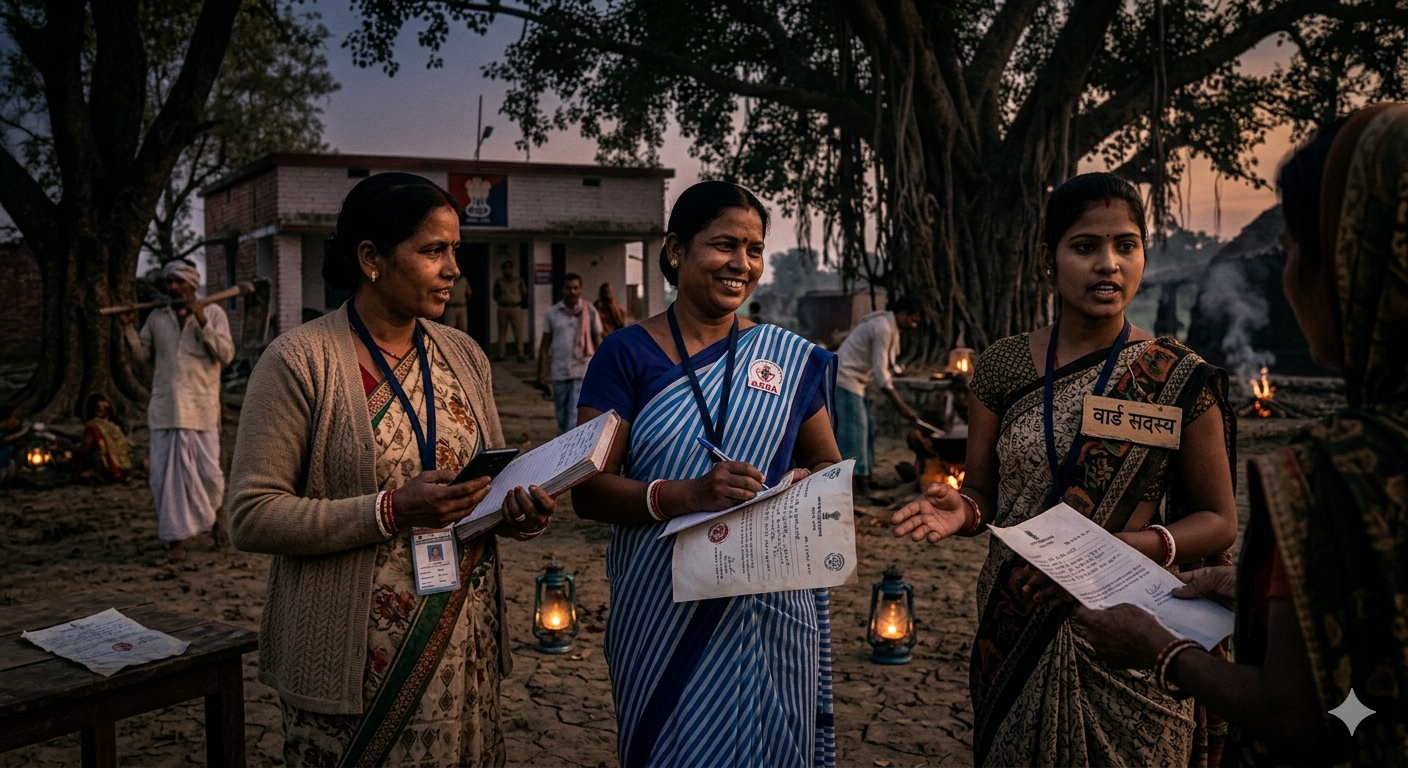
These demographics matter.
Women aren’t always being hunted because of their vulnerability, as is often believed, but many are targeted because they are visible, independent and assertive. The ‘witch’ label is a weaponised strategy designed to push them out of decision-making spaces, strip them of economic independence and sometimes force them out of their own homes.
The Machinery of Violence
Traditional healers, or ojhas, strategically validate this violence. Once an ojha brands someone a daayan, the community feels justified in committing atrocities. Premeditated crime is suddenly reframed as a necessary act.
The brutality extends far beyond killing, though that does happen in many cases. Women reported being beaten, having their hair tonsured, and being paraded naked through their villages. Some were forced to consume human excreta in vile ‘cleansing’ rituals.
The economic extortion is relentless; one woman was forced to sell her husband’s bicycle, her family’s only source of income, to fund a ritual meant to ‘cure’ her.
The social and psychological ruin frequently outlasts the physical bruises. Survivors are utterly ostracised. Neighbours refuse to speak to them, children are told to stay away and employment within the village is denied.
One survivor reported living entirely on Public Distribution System Rations (government-run, national food security program in India that manages the procurement and distribution of subsidised food grains and essential commodities to eligible low-income families) because no one will hire her.
Predictably, 84% reported a severe decline in their physical and mental health. In some cases, the gaslighting was so profound that some women actually began to question themselves, wondering if they had somehow caused harm to others.
Systemic Failure and Grassroots Resistance
Despite being the first ever Indian state to enact anti-witch hunting legislation, Bihar’s Prevention of Witch Practices Act, 1999, is practically useless on the ground.
The study revealed a devastating gap between the law and reality. An astounding 85% of village-level leaders did not even know the law existed. Only about 31% of survivors filed police reports, and those who did were often met with slow or dismissive responses.
The law exists, but it is not known, not enforced and not taken seriously.
In this void, the women’s federations have become the only lifeline. They run Nari Adalats to provide a space for women to document cases and seek justice or mediation. Through Jag Jagi Kendras (grassroots learning hubs focused on functional literacy and rights-based education, designed to empower women with the practical knowledge needed to navigate state bureaucracy and legal systems), they build community awareness, sometimes deliberately operating these centres out of the homes of accused women to forcefully shatter social boycotts.
Those working in the federations are the ones stepping in during emergencies to provide shelter, arrange medical help and support legal action.
The Path Forward
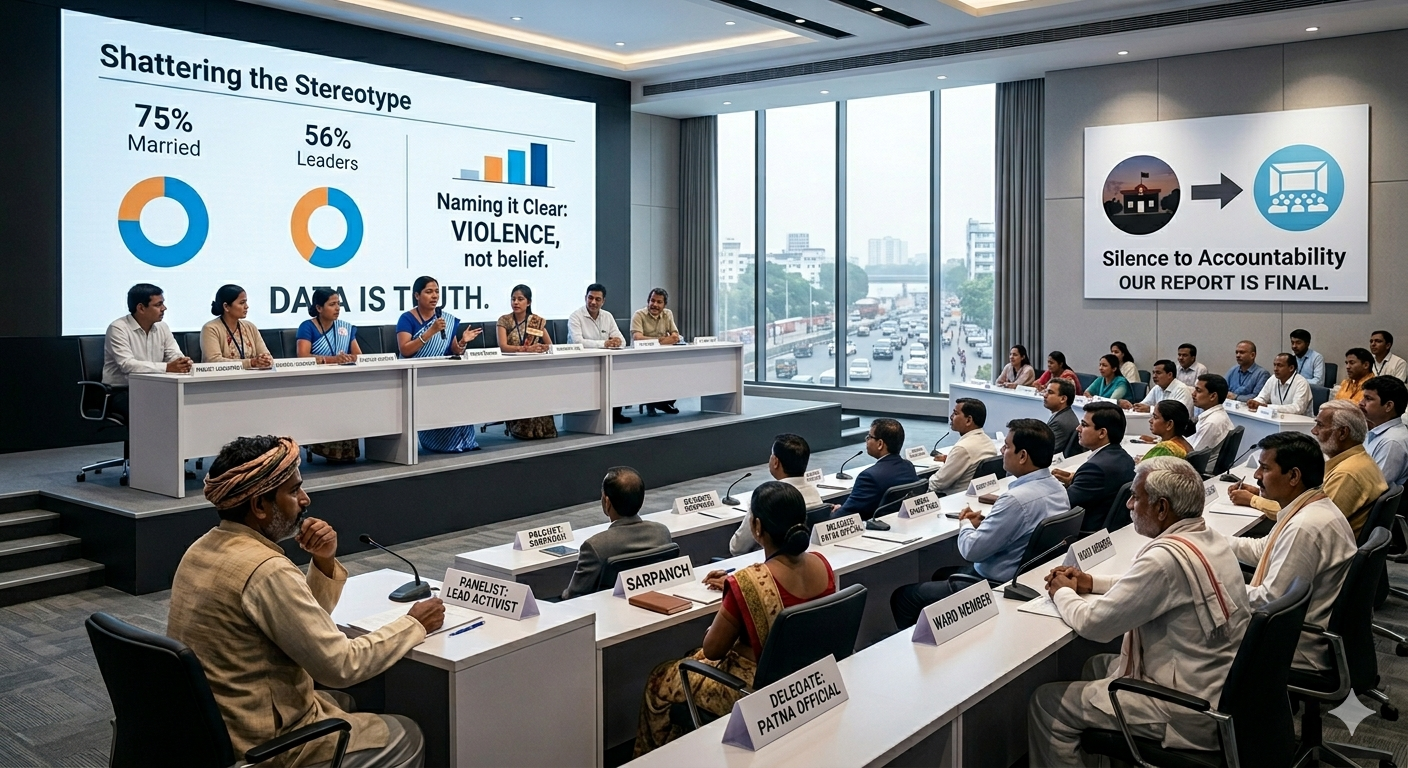
These findings are now being used to uncover this secret violence hidden in villages.
Bringing these findings into public meetings and seminars in Patna, the capital of Bihar, enables the federations to demand systemic change.
A major hurdle is that Panchayat members (democratic leaders of a village or group of villages, including the Sarpanch/Head and Ward Members) are largely oblivious to their own role in addressing these cases. As the primary executive and judicial authority at the village level, their role is to serve as frontline responders who maintain social harmony and resolve local disputes; they possess the unique social authority to immediately invalidate ‘witch’ labels and prevent the enforcement of social boycotts.
The Panchayat members must be brought into the process because their current silence often stems from a lack of legal training and a fear of political backlash. By integrating them, the campaign transforms these leaders from complicit spectators into accountable state representatives, ensuring that the safety of marginalised women becomes a formal administrative priority rather than a ‘private family matter’ ignored by the law.
The demands are uncompromising: we need aggressive implementation of existing laws, comprehensive awareness at the village level and strict accountability for the ojhas who instigate this violence. Crucially, survivors need targeted support, including legal aid, protection and rehabilitation.
Witch-hunting is not a leftover practice from the past. It is a modern, calculated practice shaped by current social and economic conditions, serving specific purposes. Calling it ‘superstition’ is not enough; it just hides more than it explains.
If the tireless work of these women’s federations teaches us anything, it is that the very first step towards eradicating this abuse is to name it clearly for what it is.
Not belief, not culture, but violence.
Acknowledgements: Images generated by Gemini from prompts.